How Are Court Budget Cuts Affecting Trial Dates? Too Soon to Tell.
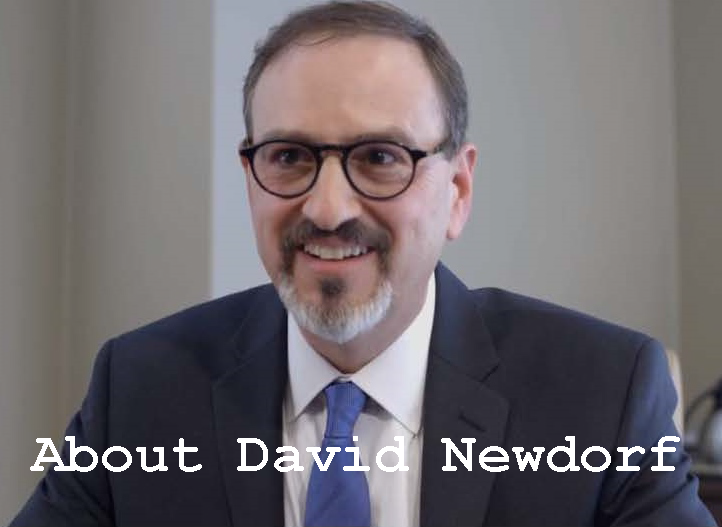
May 19, 2012 by David Newdorf
Filed under Around the Courthouse
It is too soon to tell if California civil trials will become an endangered species, as many have predicted, due to court budget cuts.
After the governor announced yet another round of cuts for California courts, a San Francisco Superior Court judge told me civil trials will take five years to get to trial — the statutory maximum delay — because criminal cases take precedence. In my own recent experience, a civil case set for trial April 16, 2012 in S.F. Superior was continued for five months because there were no courtrooms available that week. That’s not all that unusual for the San Francisco civil courts, even before the cuts.
One recent change is the elimination of court reporters for most courtrooms in San Francisco, Alameda, Los Angeles and many other counties. Lawyers now need to arrange for their own court reporters.
On the other hand, lawyers may be reacting too much, too soon to the doom-and-gloom forecasts. I got the following e-mail message sent May 18, 2012 on behalf of Kelly Dermody, president of the Bar Association of San Francisco:
We have been meeting with our San Francisco Superior Court as it continues to respond and adapt to reduced resources and staffing. One of the messages we have heard from the Court is a concern that many litigants with trial dates are appearing on the day of trial unprepared to go forward, presumably because they have expected (erroneously) that no courtroom would be available due to budget cuts. . . . Accordingly, we hope you will spread the message widely that, at least for now, trial dates are holding and the Court expects (and the system needs) parties to be prepared for trial or to seek relief from trial dates sufficiently in advance of trial.
There you have it. Trials are still getting courtrooms — at least sometimes and at least for now. As I’ve often said, don’t assume your case is not going to start as scheduled. It’s a variant of Murphy’s Law. If you’re not ready for trial call, you are sure to be assigned a courtroom.
Which reminds me of a joke.
Woman (as it starts to rain): Why don’t you open your umbrella?
Man: It won’t help. It’s full of holes and leaky.
Woman: Then why did you bring it?
Man: I didn’t think it was going to rain.
About California Litigation Firm Newdorf Legal
David Newdorf is managing attorney of Newdorf Legal, which represents individuals, businesses and public entities in trials and appeals. The firm’s practice areas include business disputes, business torts/interference with contract, breach of contract, breach of fiduciary duty, fraud, investment disputes, real estate, commercial landlord-tenant cases, and municipal law.
Mr. Newdorf worked previously as a trial lawyer and team leader in the San Francisco City Attorney’s Office and was a litigation associate at a major international law firm. Mr. Newdorf was recently listed, for the second year in a row, in Northern California Super Lawyers magazine, an honor reserved for 5 percent of the State’s lawyers based on nomination by fellow lawyers and evaluation of professional reputation and achievement. In a more unusual accolade, Mr. Newdorf was named “Badass lawyer of the week” by The Recorder’s blog, LegalPad.
For all of your litigation questions, contact Newdorf Legal, a San Francisco business litigation law firm.
S.F. Superior Court’s Closure of One Law & Motion Courtroom Will Lead to Big Changes
September 19, 2011 by David Newdorf
Filed under Around the Courthouse
Effective October 3, 2011, San Francisco Superior Court is closing one of its two Law and Motion courtrooms due to budget cut backs.
The new Law and Motion judge will be the Hon. Harold E. Kahn, to be located in Department 302 at the Civic Center Courthouse. Judges Peter Busch and Loretta Giorgi, who had been assigned to Law and Motion duties, will be moving on to the Hall of Justice, where they will preside over criminal trials.
The coming 50 percent reduction in judicial staffing will lead to big changes in civil law and motion practice. Just a year or two ago, there were two commissioners handling discovery motions in addition to two Law and Motion judges. The Court elminated the Discovery Departments and shifted that work to the two law and motion judges. Now, Judge Kahn will be handling the work load formerly shared by four judicial officers (with the exception of asbestos cases, which have all been transferred to a new, specialized department).
In the past, a lawyer could schedule a motion in S.F. Superior Court on any date without first reserving the hearing date. That will inevitably change. San Francisco will be forced to follow other Bay Area courts, such as San Mateo and Alameda County, that ration hearing dates. These courts — and no doubt, San Francisco soon — allow only a limited number of motions on each hearing date. In some counties, it takes 60 days to have a demurrer heard. With several rounds of motions and amended complaints, a case can easily plod along for a year or more in the initial pleading phase.
This cutback came after the state Judicial Council provided several million dollars in additional funding in order to stave off even more severe layoffs in San Francisco Superior Court. The state court cutbacks will likely put additional pressure on federal courts as more lawyers decide to go federal if they have that option. For years, the trend had been in favor of state court filing. Many lawyers who could have filed in federal court chose to file employmnent and civil rights cases in Superior Court under California state stautes to avoid federal court.
With these cutbacks, lawyers will need to be more focused and effective advocates to get the attention of an over-worked Law and Motion department. See San Francisco Law and Motion Tips for best practices in this department.
ABOUT NEWDORF LEGAL – A CALIFORNIA
BUSINESS LITIGATION LAW FIRM
Newdorf Legal is the go-to small firm for big problems. When business executives and public officials face complex legal challenges, they turn to David Newdorf for advice and representation. The firm’s lawyers have significant experience in the private and public sectors handling high-profile litigation. Newdorf Legal provides business and public entity clients expert advice and representation in:
- business litigation
- commercial disputes
- California breach of contract lawsuits
- business torts/interference with contract
- real property litigation
- joint venture/partnership issues
- investor lawsuits
- fraud and other civil actions
For a free copy of our informative brochure, “The Top 10 Business Litigation Mistakes . . . and how to avoid them,” contact Newdorf Legal.
Call David Newdorf at (415) 357-1234 for all of your California complex litigation questions.
San Francisco Jail Strip Search Policy Upheld by Courts Based on Record of Contraband Smuggling
September 11, 2011 by David Newdorf
Filed under Around the Courthouse
September 2010 — A federal appellate court has ruled that San Francisco’s policy of conducting a visual strip search for weapons and drugs before placing new arrestees in the general jail population did not violate the prisoners’ rights.
The 6-5 ruling by a panel of judges of the U.S. Court of Appeals for the Ninth Circuit came in the case of Bull v. City and County of San Francisco, 595 F.3d 964 (9th Cir. 2010) (en banc),a class action lawsuit brought on behalf of arrestees who had been strip searched at the San Francisco County Jail from 2002 to 2004.
San Francisco attorney David Newdorf, who represented the City along with attorneys from the San Francisco City Attorney’s Office, said the ruling was a victory for common sense and safety. The County Jail’s policy was to release arrestees without a strip search whenever possible through issuance of a citation or posting of a bail bond, Newdorf said. For safety and security, deputies only strip searched those who were not eligible for immediate release and were going to be housed with other detainees in the general jail population, he said.
Jail Safety Justifies the Searches
“The evidence before the court showed that more than one thousand of items of drugs, weapons and dangerous contraband were smuggled into the County Jail from 2000 to 2003,” Newdorf said. “This decision is a common-sense ruling. Prisons are already dangerous places. Those who are arrested, or whose loved ones are arrested, will be able to rest easier knowing that measures have been taken to prevent inmates from smuggling needles, knives and other dangerous items into the confined jail environment.”
Newdorf, the managing attorney of Newdorf Legal in San Francisco, was a deputy city attorney from 2001 to 2008. He briefed and argued the Bull case in the U.S. District Court and before a three-judge panel of the Ninth Circuit. He assisted the City Attorney’s Office in the March 26, 2009 argument before the en banc 11-judge panel.
Judge Sandra Ikuta, who wrote the majority opinion in Bull, stated:
“The record reveals a pervasive and serious problem with contraband inside San Francisco’s jails, as well as numerous instances in which contraband was found during a search, indicating that arrestees’ use of body cavities as a method of smuggling durgs, weapons, and items used to escape custody is an immediate and troubling problem for San Francisco jail administrators.”
Judge Ikuta concluded that despite the “invasive and embarrassing” nature of a strip search, “San Francisco’s strip search policy was reasonable and therefore did not violate the class members’ Fourth Amendment rights.”
About California Litigation Firm Newdorf Legal
San Francisco-based Newdorf Legal is a firm of trial lawyers that represents companies, executives, investors, government and public officials in litigation. The firm handles disputes related to breach of contract, interference with contract, trade secrets, fraud, unfair business practices, real estate and public entity litigation. For more information, contact David Newdorf at 415-357-1234 or info(at)newdorf.com.
Learn about the effect of the California Supreme Court’s Howell v. Hamilton Meats decision on valuing medical damages in personal injury lawsuits.
August 20, 2011 by David Newdorf
Filed under Around the Courthouse
The Bar Association of San Francisco is sponsoring a seminar Sept. 28, 2011, on the effects of the recent California Supreme Court decision in Howell v. Hamilton Meats on personal injury litigation.
Topics
• The implications of the California Supreme Court decision in Howell v. Hamilton Meats for valuing medical damages in personal injury cases;
• How the Howell decision affects the selection and use of medical damages experts and changes settlement and trial strategies for plaintiffs and defendants;
• Substantive and procedural questions left unanswered by Howell;
• Analysis of Howell within the broader context of “negotiated rate differentials,” the collateral source rule and differential billing for the insured, uninsured and recipients of Medicare/Medicaid.
Speakers
- Matthew Davis
Walkup, Melodia, Kelly & Schoenberger
- Kelly Dermody
Lieff, Cabraser, Heimann & Bernstein, LLP
- David Ettinger
Horvitz & Levy LLP
- Philip Leider
Chapman, Popik & White, LLP
- David Newdorf
Newdorf Legal
For more information, follow the link to the BASF seminar flier and sign-up form.
For all of your litigation questions, contact Newdorf Legal, a San Francisco business litigation law firm.
Ninth Circuit Sends Mixed Signals In Strip Search Case
August 27, 2008 by David Newdorf
Filed under Around the Courthouse
There were three opinions written — a majority, concurrence and dissent — on the 2-1 Ninth Circuit panel that ruled against San Francisco on the constitutionality of its former jail strip search policy. As the Legalpad blog said in its headline: 9th Plays Jail Strip Searches Left, Right & Center. Although on the surface, the Court did not upset 20 years of its strip search jurisprudence, two of the three panel members urged the Court to reject its precedents as inconsistent with the Supreme Court’s 1979 decision in Bell v. Wolfish.
The case is Bull v. City and County of San Francisco (9th Circuit August 22, 2008). For a more detailed analysis, read Ninth Circuit Strip Search Law In Flux After Bull Decision. Read the three opinions for yourself at the Section 1983 Civil Rights Law Reporter, a companion blog to Newdorf Legal.
Jail Strip Search Update
An en banc panel of the Ninth Circuit reversed the panel decision in September 2010. For the latest update on the Bull case, read about the 9th Circuit en banc decision.
For all of your litigation questions, contact Newdorf Legal, a San Francisco business litigation law firm.
Ninth Circuit affirms San Francisco’s victory in the “Fajitagate” case.
July 23, 2008 by David Newdorf
Filed under Around the Courthouse
A three-judge panel of the U.S. Court of Appeals for the Ninth Circuit affirmed summary judgment in favor of San Francisco in a civil rights lawsuit dubbed “fajitagate.” In an unsigned six-page memorandum decision issued July 23, 2008, Judges John Noonan, Sidney Thomas and Jay Bybee held that the City was not responsible for any injuries plaintiffs may have sustained in an altercation involving three off-duty San Francisco police officers. In a novel claim for liability involving off-duty officers, plaintiffs argued that the off-duty officers were emboldened to attack the two plaintiffs because San Francisco had not properly disciplined one of the officers — the Police Chief’s son, Alex Fagan, Jr. — for allegedly improper use of force while on duty.
The judges wrote: “Plaintiffs did not tender sufficient evidence to create a genuine issue of material fact as to whether a City policy of inadequate discipline for officers’ on-duty misconduct was the proximate cause of three off-duty officers’ decisions to assualt the Plaintffs for their bag of steak fajitas.”
Scott Graham, editor of The Recorder, writing in his paper’s blog, opined that with this decision, the case that ignited a storm of media attention “has ended with a whimper.”
Former San Francisco Deputy City Attorney David Newdorf (who with Deputy City Attorney Sean Connolly represented the City in five related S.F.P.D. excessive force cases) briefed and argued the case before Judge Jeffrey White in the U.S. District Court and in the Ninth Circuit.
For all of your litigation questions, contact Newdorf Legal, a San Francisco business litigation law firm.
Oral Argument Set In Ninth Circuit Appeal Of ‘Fajitagate’ Case
December 22, 2007 by David Newdorf
Filed under Around the Courthouse
The U.S. Court of Appeals for the Ninth Circuit has calendared oral argument in the federal civil rights claims over a 2002 altercation between three off-duty S.F.P.D. officers (one of whom was the son of the assistant chief) and a San Francisco bartender and his friend. The media dubbed the case “fajitagate” because the fracas supposedly started over a bag of steak fajitas outside a Union Street bar. The melee fueled a perfect storm of headlines, hearings, lawsuits, investigations and indictments. But when the dust settled, most of the various civil and criminal charges against the City and SFPD officials and officers had been dismissed by judges or rejected by juries. Some cases, including this one, are on appeal.
In Snyder and Santoro v. City and County of San Francisco, U.S. District Court Judge Jeffrey White held that plaintiffs could not bring a federal civil rights claim over private, off-duty conduct of police officers. Plaintiffs had argued that they should be permitted to bring a lawsuit based on the SFPD’s alleged lax discipline for on-duty misconduct, which they contend caused the off-duty altercation. Plaintiffs’ appeal from Judge White’s decision in the “fajitagate” federal civil rights lawsuit will be argued before the Ninth Circuit at Booth Auditorium, Boalt Hall, on the U.C. Berkeley campus in Berkeley on February 13, 2008.
Defendants are represented by Deputy City Attorneys Sean Connolly and David Newdorf. Plaintiffs are represented by San Francisco attorneys John Houston Scott, Eric Safire and Dennis Cunningham.
For all of your litigation questions, contact Newdorf Legal, a San Francisco business litigation law firm.
Ninth Circuit Hears Oral Argument In Strip Search Class Action
November 11, 2007 by David Newdorf
Filed under Around the Courthouse
The U.S. Court of Appeals for the Ninth Circuit on November 6, 2007, heard oral argument in Bull v. City and County of San Francisco, a class action challenging the County Jail’s former strip search policy. Until January 2004, the San Francisco County Jail made an unclothed visual inspection for drugs and weapons of prisoners who did not post bail and were not eligible for citation release. These prisoners were searched before they were placed in the general jail population. Ninth Circuit Judges Sidney Thomas, Richard Tallman and Sandra Ikuta heard about the record of drugs and weapons smuggling at the jail, and the unfortunate death of an inmate from a cocaine overdose after the jail relaxed its strip search policy.
Deputy City Attorney David Newdorf argued the case for the Sheriff. Sacramento lawyer Mark Merin argued for the plaintiffs.
You can listen to (or download) the 47-minute oral argument from the link on the Court Decisions page of Newdorf Legal. The argument was also reported in The Recorder, which you can read on the Articles and Commentaries page.

For all of your litigation questions, contact Newdorf Legal, a San Francisco business litigation law firm.
Quiz Answers: Jurists’ Favorite Theorists Revealed
October 29, 2007 by David Newdorf
Filed under Around the Courthouse
Answers to the “Around the Courthouse” Jurisprudence Luncheon Quiz. (Find the Quiz by clicking on the “Around the Courthouse” Category on the right sidebar.)
At the Bar Association of San Francisco’s First Annual Jurisprudence Luncheon, the all-star panelists identified their favorite legal thinkers as follows:
- Hon. Joseph Grodin – Cardozo.
- Hon. Stephen Reinhardt – Dworkin.
- Hon. Alex Kozinksi – Harlan II.
The question was posed by panel moderator Jim Brosnahan of Morrison & Foerster.
Reinhardt & Kozinski: The Judicial “Odd Couple” Take Their Show On The Road
October 29, 2007 by David Newdorf
Filed under Around the Courthouse
Judge Alex Kozinski reprised his role as Oscar Madison opposite Judge Stephen Reinhardt (as Felix Unger) in “The Judicial Odd Couple,” an entertaining lunch-time performance at the Bar Association of San Francisco. Okay, that’s not entirely true. The two Ninth Circuit jurists did engage in a lively discussion, but the actual title of the event on October 25, 2007, was the First Annual Jurisprudence Luncheon: How Judges Decide Cases. Too bad, because I think my title would have been more fitting.
Like the original play by Neil Simon, the re-make had both drama and comedy. The dramatic segment was the Q & A between a lawyer in the audience and Judge Kozinski.
In the lead-up to this exchange, Judge Kozinski explained his textualist approach to Constitutional interpretation. The Constitutional prohibition on “cruel and unusual punishment,” he said, can be understood through interpreting these everyday words: cruel and unusual. “The death penalty is cruel, even if done nicely, but is it unusual?” Kozinski asked. No, he said, because 38 states have enacted it.
This led to the following question and answer:
Lawyer: Judge Kozinski, if 26 states enacted laws requiring castration for rapists, would it no longer be cruel and unusual punishment?
Kozinski: I don’t think you would need that many. Ten to 15 [states] would suffice.
Kozinski demonstrated that he is still not afraid to speak his mind. Judge Reinhardt is no shrinking violet, either. The liberal Reinhardt had a jab or two for his conservative colleague, but nothing as stunningly frank as the comments above. Kozinski clearly enjoyed tweaking his (presumably liberal) San Francisco audience.
Both judges complained about the politics of judicial confirmation. Judge Kozinski illustrated the problem today with a page from history: the 1979 Senate confirmation hearing for Judge Harry Pregerson, described by Kozinski as “one of the truly ultimately liberal judges the world has ever seen.”
At Pregerson’s confirmation hearing, then-Senator Alan Simpson (R-Wyo.) asked the nominee if the law required a decision “that offended your own conscience, what might you do in that situation.”
Pregerson responded: “I have to be honest with you. If I was faced with a situation like that and it ran against my conscience, I would follow my conscience.”
This was a few years before the Reagan crusade to reshape the federal judiciary and even longer before the Judge Bork confirmation battle. Judicial selection hasn’t been the same since. Still, even in that day and age, Pregerson’s honesty stood out. Senator Patrick Leahy (D-Vt.) commented at the hearing: “I can’t help but think in your answer to Senator Simpson’s question, that I expect a great number of Federal judges feel as you do, but I suspect only a small percentage would be as candid as you were in your response.” The full Senate went on to confirm unanimously Pregerson’s nomination to the Ninth Circuit.
Said Kozinski: “Those were the days. No one will admit anything like this ever again.”
In his remarks, Reinhardt took exception to the title of the panel discussion. “I don’t know how to answer the question ‘How do judges make a decision.’ Much of what judges do is unknowing. In many cases you’d have to ask a psychiatrist why a judge reached a particular decision.”
I agree with Reinhardt that judges are limited in their ability to peel back the veneer and expose the inner workings of judicial decision-making. At this event, and others like it, judges invariably say that they try to apply consistent legal principles to the facts of the case without bias or prejudice, fear or favor. And every practitioner – recalling some personal experience – responds: “Yeah, right.”
Moderator Jim Brosnahan of Morrison & Foerster seemed to enjoy the pointed questions directed to the panel. “This is fun,” he said. “The lawyers get to ask the judges questions.” Kozinski was quick with a come back: “You will notice I didn’t do what the lawyers do with judges – evade the question.” Touche.